



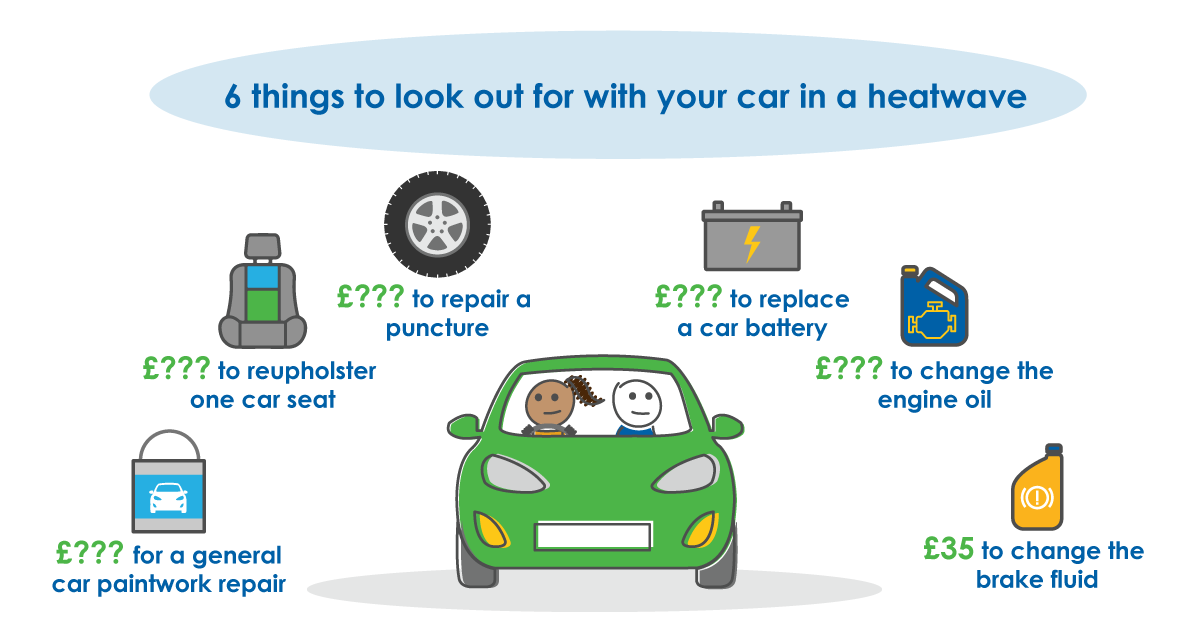
Hot weather can place more strain on some parts of a car. It may also make an existing fault easier to notice.
Tyres, coolant, engine oil and batteries may all be affected during very warm weather. Strong sunlight may also affect a car’s paint and seats over time.
This article explains six hot-weather car problems. It also gives estimated UK costs for common repairs.
Important: This article gives general information from third-party sources. It is not mechanical or safety advice from Go Car Credit. Drivers should follow their vehicle handbook and speak to a qualified mechanic or breakdown provider about any fault.
Cost guide: All prices are estimates. The amount charged may depend on the car, the fault, the parts needed, the location and the garage. Prices may also change over time.
1. Tyre pressure and tyre damage
Air expands as it becomes warmer. This means the pressure inside a tyre may rise after the car has been driven.
The Highway Code says tyre pressure should be checked before a journey while the tyres are cold. It says warm tyres may give a misleading reading.
It also says drivers should use the pressure shown in the vehicle handbook or given by the vehicle maker.
Our guide to checking tyre pressure explains more about tyre gauges and recommended pressure levels.
Signs of tyre wear or damage may include:
- cuts or cracks in the rubber
- bulges in the side of the tyre
- nails or other objects in the tyre
- uneven wear
- low tread
The government provides more information about tyre pressure and vehicle maintenance.
How much could tyre damage cost?
Checkatrade estimates that repairing a tyre puncture may cost between £30 and £50.
Not every puncture can be repaired. The location and size of the damage will affect whether a tyre specialist can repair it.
Checkatrade gives the following estimated replacement costs:
- budget tyre: about £45 to £70
- mid-range tyre: about £75 to £120
- premium tyre: from about £220
Tyre size, brand and vehicle type may all affect the price.
More cost details are available in Checkatrade’s tyre puncture repair guide and tyre replacement guide.
2. Engine coolant and overheating
Coolant helps control the temperature of a car’s engine. Hot weather may place more strain on the cooling system.
A coolant leak or a fault with the radiator, water pump, hose or thermostat may lead to overheating.
Possible signs of an overheating engine include:
- a temperature warning light
- a temperature gauge moving into the red area
- steam from under the bonnet
- an unusual or sweet smell
- a loss of engine power
The AA says cooling systems may come under more strain in hot weather. It also warns drivers not to remove the coolant cap while the engine is hot.
The RAC says an overheating car should be stopped safely and switched off. Its guidance says the engine may need at least 30 minutes to cool.
The vehicle handbook may give more information about warning lights and the cooling system for that car.
The RAC explains what an overheating warning may mean and provides information about engine coolant.
How much could a coolant problem cost?
RAC data places the cost of some simple coolant leak repairs between £50 and £300.
The cost may be higher if the radiator needs more work. The RAC says radiator replacement may cost from £400 to more than £2,000.
The make, model and cause of the leak will affect the final cost.
More information is available in the RAC guide to coolant leaks and repair costs.
3. Car battery problems
Cold weather is often blamed for flat car batteries. Hot weather may also cause battery problems.
Heat may make a battery wear out faster. It may also reveal a fault in an old or weak battery.
Signs of a battery problem may include:
- the engine starting slowly
- the car taking longer to start
- dim lights when the engine starts
- a battery warning light
- electrical parts not working as normal
A swollen, cracked or leaking battery may also have a fault. Heavy rust around the battery parts may be another sign.
A garage or breakdown service can test the battery.
How much does a new car battery cost?
RAC Mobile Mechanics gave an average battery replacement cost of £253.
This figure came from prices given between October and December 2025.
The price may depend on the car and the battery it needs.
Cars with stop-start systems may need a more costly battery. These are often called AGM or EFB batteries.
The RAC price includes the battery, fitting, labour and VAT.
Other garages and services may charge a different price.
The RAC has more details about car battery replacement prices.
4. Low or old engine oil
Engine oil helps protect the moving parts inside an engine. It also helps move heat away from those parts.
Low oil may lead to engine wear or damage at any time of year. Hot weather may place more strain on an engine that already has an oil problem.
Possible signs of an oil problem include:
- an oil warning light
- oil under the parked car
- a burning smell
- unusual engine noise
- smoke from the engine area
The vehicle handbook explains how the oil level is checked and which type of oil the car needs.
Oil and filter changes may also form part of a car service. Our guide to car servicing explains what may be included in an interim or full service.
How much does an oil change cost?
The RAC reported an average mobile oil and filter change cost of £229 in March 2026.
This included removing the old oil, replacing the filter and adding new oil.
The price may depend on the make and model of the car. The amount and type of oil needed may also affect the cost.
A garage price may differ from the cost of a mobile service.
The RAC explains more in its guide to oil change costs.
5. Sun damage to paint and seats
Long periods of strong sunlight may affect car paint, plastic trim and seat fabric.
Leather may also lose moisture over time. This may lead to fading, dry patches or cracks.
Direct sunlight may also make leather seats, dark trim and metal seatbelt parts very hot.
The AA says parking away from direct sunlight may help keep the inside of a car cooler. It also lists windscreen covers and window shades among its summer driving information.
More warm-weather information can be found in our summer driving guide.
How much could seat damage cost?
Checkatrade gives the following estimated leather repair costs:
- small or local repair: about £50 to £150
- full seat repair: about £120
- rear seat repair: about £150
- full faux leather reupholstery: from about £1,200
- full real leather reupholstery: from about £1,400
The amount of damage and type of material may affect the price.
Checkatrade gives more details in its leather car seat repair cost guide.
How much could paint damage cost?
Checkatrade places most paint repairs between £60 and £1,200.
Its March 2026 cost guide gives the following estimates:
- scratch repair: about £60 to £210
- general paint repair: about £70 to £1,200
- one side panel respray: about £400
- full respray with little repair work: about £2,400
- full respray with some repair work: about £2,900
The size of the damaged area, paint type and amount of bodywork will affect the final price.
More information is available in Checkatrade’s car paint repair cost guide.
6. Air conditioning and brake problems
Air conditioning may help keep the inside of a car cooler. If the air from the vents is no longer cold, the system may need a regas or repair.
Possible signs of an air conditioning problem include:
- warm air from the vents
- weak airflow
- an unusual smell
- new noises when the system is switched on
- water appearing inside the car
The AA includes working air conditioning in its summer driving guidance.
Hot weather alone should not make healthy brakes fail. However, heavy braking and old brake fluid may add to heat inside the braking system.
Possible signs of a brake fault include:
- a soft or spongy brake pedal
- the car taking longer to stop
- a brake warning light
- grinding or squealing sounds
- the car pulling to one side
Changes in how the brakes feel may need to be checked by a qualified garage.
How much could an air conditioning problem cost?
RAC garage pages place a typical air conditioning regas between £50 and £150.
The RAC says smaller air conditioning repairs may cost between £100 and £300.
Major work, such as replacing a failed compressor, may cost from £400 to more than £800.
The type of gas and the cause of the fault will affect the price.
The RAC explains more about air conditioning regassing and repair costs.
How much could brake work cost?
The cost will depend on the type of brake work needed.
A brake fluid change is different from replacing brake pads, discs or callipers. Each repair will have a different price.
The RAC provides general information about brake fluid and brake maintenance.
Estimated heatwave car repair costs
The table shows the guide prices used in this article.
| Work needed | Guide price | Price source |
|---|---|---|
| Fix a tyre puncture | £30 to £50 | Checkatrade |
| Fit a low-cost tyre | £45 to £70 | Checkatrade |
| Fit a mid-price tyre | £75 to £120 | Checkatrade |
| Fix a small coolant leak | £50 to £300 | RAC |
| Fit a new radiator | £400 to more than £2,000 | RAC |
| Fit a new car battery | £253 on average | RAC |
| Change the oil and filter | £229 on average | RAC |
| Fix part of a leather seat | £50 to £150 | Checkatrade |
| Fix damaged car paint | £60 to £1,200 | Checkatrade |
| Paint the whole car | £2,400 to £2,900 | Checkatrade |
| Refill the air conditioning | £50 to £150 | RAC |
| Fix a small air conditioning fault | £100 to £300 | RAC |
| Fix a large air conditioning fault | £400 to more than £800 | RAC |
These prices are only a guide.
A garage may charge more or less. The price may also change based on the car and the area.
What do motoring organisations say about hot-weather journeys?
The AA says drivers should plan for delays in hot weather.
It says people should take water and keep their phone charged.
The AA also says it may be best to travel outside the hottest part of the day.
Its hot-weather list includes:
- drinking water
- a charged phone
- a phone charger
- sun cream or a hat
- any medicine you need
- breakdown cover details
Our summer driving tips give more help for hot-weather trips.
Why are parked cars dangerous in hot weather?
A parked car may become very hot within a short time.
The AA reported that the inside of a car may reach about 60°C on a sunny day when the outside temperature is 27°C.
The RSPCA says a car may reach 47°C within an hour when the outside temperature is 22°C.
The RSPCA warns that dogs should not be left in a vehicle during warm weather. It says this applies even when the car is in the shade or the windows are open.
The RSPCA provides more information about the risk of dogs in hot cars.
What do motoring organisations say about an overheating car?
The RAC says an overheating car may show steam, warning lights or a high temperature reading.
Its guidance says the car should be stopped safely and the engine switched off. It also says the engine should be allowed to cool before the cooling system is checked.
The AA warns that the coolant cap should not be removed while the engine is hot.
Drivers can find full instructions in the vehicle handbook or contact a breakdown provider.
Frequently asked questions about cars and hot weather
Does tyre pressure rise in hot weather?
Yes. Air expands when it becomes warm, so tyre pressure may rise after the car has been driven.
The Highway Code says tyre pressure readings should be taken when the tyres are cold.
Can hot weather affect a car battery?
Yes. High temperatures may speed up the chemical reactions inside a battery.
This may make a fault in an old or weak battery easier to notice.
Why should a coolant cap not be opened on a hot engine?
A hot cooling system may be under pressure.
The AA and RAC warn that removing the cap may release hot liquid or steam.
Can air conditioning increase fuel use?
Air conditioning uses energy. This means it may increase fuel use in a petrol or diesel car.
It may also reduce the available range of an electric vehicle.
Can sunlight damage car paint?
Long periods of strong sunlight may cause paint to fade or lose its shine.
The condition of the paint and the length of exposure may affect the level of damage.
Can heat damage leather seats?
Heat and strong sunlight may cause leather to fade or dry out over time.
Dry leather may later show cracks or worn areas.
Does hot weather make brake fluid boil?
Hot weather alone should not make brake fluid boil during normal driving.
However, old fluid may contain moisture. Heavy braking may also create more heat within the braking system.
What does an engine temperature warning light mean?
It may mean that the engine temperature is too high.
The meaning may vary between cars, so the vehicle handbook will give the correct information for that model.
Find more car maintenance information
Hot weather may not cause every car fault. It may make an old problem easier to spot.
Warning lights, leaks, odd smells or changes in how the car starts may be signs of a fault.
Our car maintenance guides have more useful information.
A garage, mechanic or breakdown service can check the car and explain what work may be needed.


