



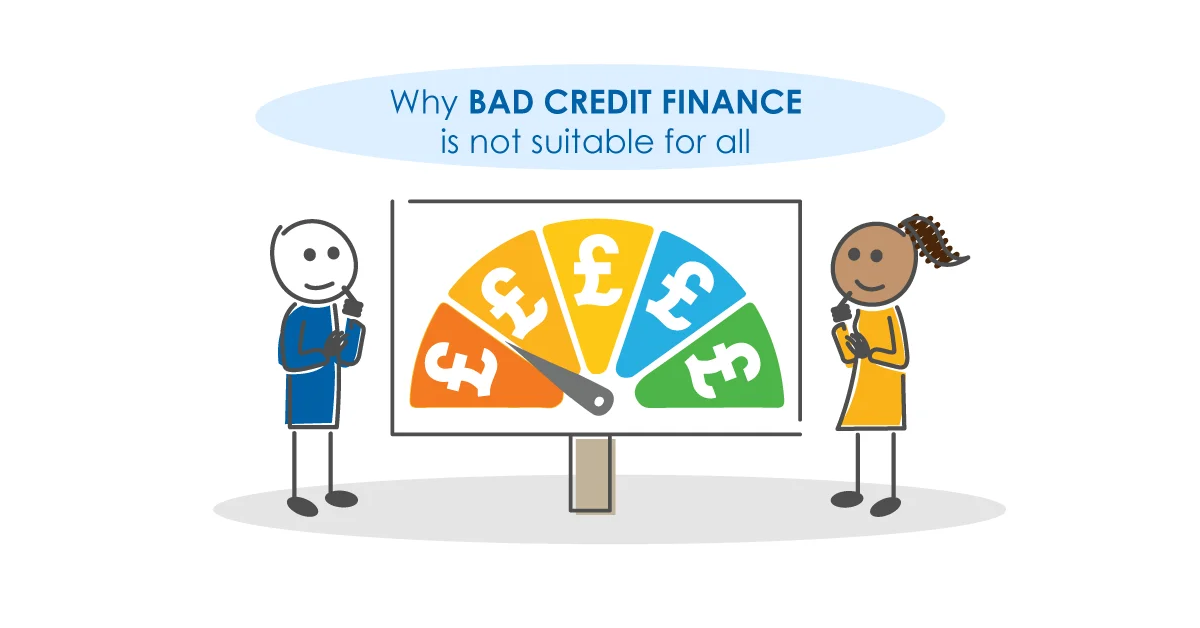
If you have had credit problems, you might be looking into finance options that are designed for people with a weaker credit history. These options could suit some people, but they may not suit everyone. A more useful test is whether the full monthly cost could fit your budget, not only what shows on a credit file.
This page explains who this type of finance could suit, when it may not be a good fit, and what you could check before you apply. If you want a deeper look at budgeting for a car, you could also read our guide on affordability.
The aim is simple: to help you think through the costs and the risks in a calm way, so you could decide what feels realistic for you.
What “bad credit car finance” means
“Bad credit car finance” is a broad label used for finance options aimed at people with a poor or limited credit history. It is often mentioned when someone has missed repayments, built up arrears, had defaults, used a debt management plan, or has had an IVA or a CCJ.
Even with specialist lending, car finance is still borrowing, so repayments could be checked against your income and regular outgoings. If you want a plain overview of the main agreement types, you could read how car finance works.
You might also see different phrases used online, but the main point is usually the same: some lenders may look at more than a perfect score. What varies is the lender’s criteria and how they assess risk and affordability.
Who bad credit car finance could suit
This type of finance could suit you if a car is genuinely needed and your budget has enough space each month. For example, reliable transport could help you get to work, manage school runs, or support caring responsibilities, as long as the total cost stays manageable.
It could also suit people whose credit issues were linked to a specific period and things are now more settled. If your income comes from self-employment, you could find extra context in our guide to self-employed car finance.
Some people hope finance could help their credit profile over time, but that is not something that could be relied on. It may be safer to focus on affordability first and treat any credit impact as uncertain.
Why bad credit car finance may not be suitable for all
It may not be suitable for everyone because it could add a fixed monthly commitment to a budget that is already under strain. If your finances only work when everything goes to plan, one unexpected bill could make repayments harder and increase stress.
It may also be a poor fit if you are trying to solve a short-term emergency with a long-term agreement. If you have already been turned down elsewhere, you could find it helpful to read what “refused” could mean before making any next move.
Another common issue is underestimating the true cost of running a car. The repayment is only one part of the monthly total, and costs like insurance, MOT work, tyres, and repairs could change without warning.
Common reasons it may not be a good fit
- Your budget has no breathing space after key bills and essentials.
- Your income changes often (seasonal work, self-employment, variable hours).
- You have not priced running costs like insurance, fuel, tax, and maintenance.
- You are already behind on priority bills such as rent, mortgage, council tax, or energy.
- You feel pressured to decide quickly rather than having time to check the numbers.
Affordability checks you could do before you apply
A simple affordability check could help you decide whether car finance feels realistic right now. You could list monthly income, subtract essential outgoings, then see what is left for car costs and a buffer for surprises.
If you want a structured template, the MoneyHelper budget planner could help you organise the numbers in one place: MoneyHelper budget planner.
If your income changes month to month, you could base your plan on a cautious figure rather than your best month. If the numbers only work in a good month, the agreement could feel tight in real life.
The running costs people often forget
The ongoing cost of owning a car often decides whether a finance agreement feels comfortable or stressful. Fuel is only one part, and costs like insurance, tax, servicing, tyres, and MOT-related repairs could add up over the year.
If you are looking at a used car, checking the MOT history could help you spot repeat issues that might lead to extra costs later. You could use the GOV.UK service to check the MOT history before you commit to a vehicle.
It could also help to set aside a small monthly amount for maintenance, because even a well-kept car might need unexpected work. A buffer may not remove risk, but it could reduce shock if something goes wrong.
Checking your credit file before applying
Your credit file could influence how a lender views an application, but it may also contain errors. Checking it first could help you understand what is recorded and spot anything that looks wrong, such as old addresses or duplicate accounts.
If you want a simple explanation of why checks differ, you could read our guide on hard and soft credit checks.
If you do decide to look at your report, it could help to take notes on what you want to query, rather than trying to fix everything at once. Small corrections could make future checks clearer.
For example, you could start with Experian’s statutory report page: Experian statutory credit report.
What if you have an IVA or a CCJ
An IVA or a CCJ could affect a lending decision, but it may not mean there are no options. A lender could look at the full picture, such as your budget today, how long ago the issue happened, and whether it has been settled.
If you want IVA-specific information, you could read our page on IVA car finance.
If you feel unsure, free, independent support could help you get clarity before you take on any new commitment. This could be useful if you are behind on bills, or if money is already tight.
National Debtline could be a good place to start: National Debtline.
Responsible lending and how to check a firm is regulated
In the UK, consumer credit firms are regulated by the Financial Conduct Authority (FCA). This matters because regulated firms are expected to treat customers fairly, give clear information, and check affordability.
If you want a simple overview of what the FCA is, you could read our guide to the FCA.
It could also help to check who you are dealing with before you share personal information. A quick check could reassure you that the firm is authorised for the activities it offers.
You could check the FCA Register here: FCA Register.
Alternatives you could consider if finance feels risky
If this type of finance feels too tight, there could be other ways to reduce pressure. You might pick a cheaper car, wait while you build a buffer, or use a short-term travel plan while your finances settle.
If you want more guides that explain related topics in plain English, you could browse our resources and choose what matches your situation.


